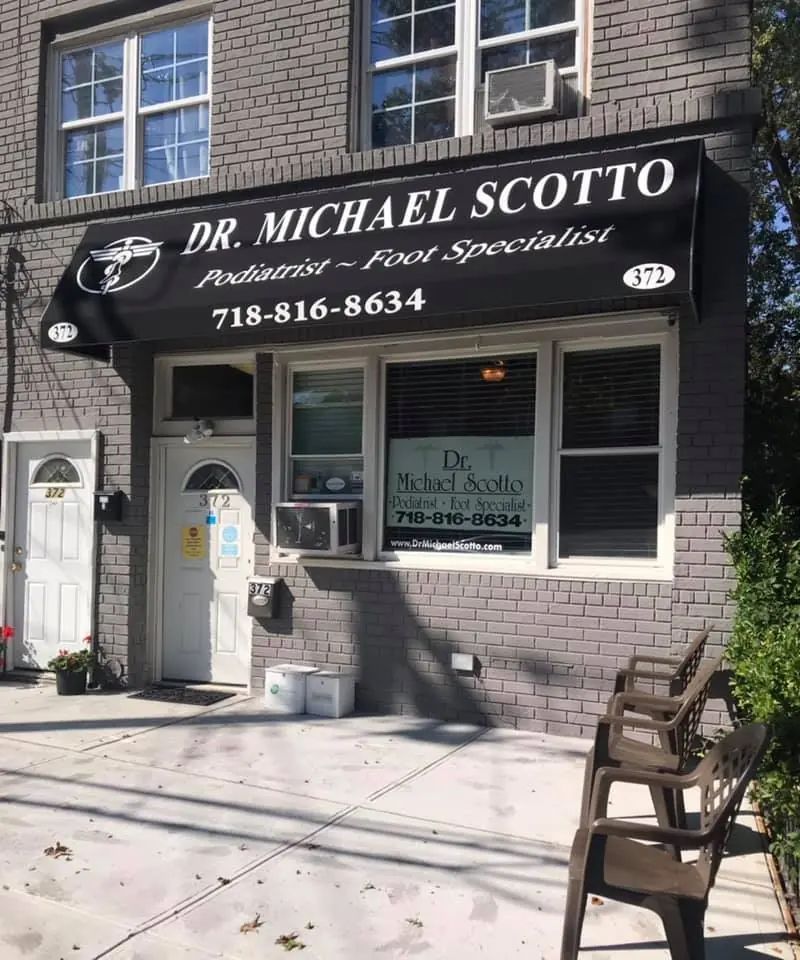
NY office
Staten Island, NY
372 Manor Road, 1st Floor
Staten Island, NY 10314
Monday, Wednesday, Thursday
Diabetes and wounds
A foot ulcer is an open sore that does not heal the way a normal cut does. Ulcers are most common in people with diabetes, nerve damage or poor blood flow, and they can become infected. Dr. Scotto provides wound care for foot ulcers at his offices in Staten Island, NY and Tinton Falls, NJ.
An ulcer is a break in the skin that goes deeper than a scrape and does not close on its own in the usual time. It often starts as a callus, blister or crack that breaks down. Signs include:
Some ulcers are painful. Many are not, especially in people with diabetic neuropathy. A stain on the sock may be the first clue.
Most foot ulcers come from a mix of pressure, reduced feeling and slow healing. Common causes and risk factors include:
Any open sore on the foot of a person with diabetes or poor circulation should be seen soon, not watched at home. Infection in a foot wound can spread quickly to deeper tissue and bone.
Seek care the same day if you notice:
Dr. Scotto offers same-day emergency appointments. If you have a high fever, confusion or a rapidly worsening foot, go to the nearest emergency room.
He looks at where the ulcer is, how big and deep it is, what the tissue in the base looks like, and whether there are signs of infection. He gently checks whether the wound reaches deeper layers. He also tests feeling in your feet, checks pulses and looks at your shoes, since the cause of the pressure is part of the diagnosis.
An x-ray can be taken at either office to look for bone involvement, a foreign object or a deformity that is adding pressure. He will also ask about your blood sugar and other health conditions that affect healing.
Healing a foot ulcer takes steady care and regular follow-up. The plan usually combines care of the wound itself with steps that remove the cause.
Offloading means reducing pressure on the ulcer. It is one of the most important parts of healing a wound on the bottom of the foot.
At home, keep the dressing clean and dry, stay off the foot as directed, and check the rest of both feet daily.
Dr. Scotto offers telehealth visits for patients in New York and New Jersey. Wound care involves cleaning, removing tissue and measuring the wound by hand, so ulcers are treated in the office.
FAQ
It varies a great deal. Size, depth, blood flow, blood sugar control and how well pressure is kept off the sore all play a part. Some ulcers close in a few weeks and others take months. Regular visits help Dr. Scotto see whether healing is on track.
Many foot ulcers form in people who have lost feeling in their feet from nerve damage. Lack of pain does not mean the sore is minor. An ulcer that does not hurt can still be deep or infected.
Walking on an ulcer pushes on the wound and slows healing. Dr. Scotto will talk with you about how to limit pressure on that spot while still getting around safely.
Most foot wounds heal better when kept clean, moist and covered with a proper dressing. Leaving an ulcer open to the air can dry it out and expose it to germs. Follow the dressing plan you are given.
Ulcers can return, often in the same spot, because the cause may still be there. Good shoes, daily foot checks and regular exams lower the chance. Learn more about diabetic foot care.
Keep reading
Where to find Dr. Scotto
NY office
372 Manor Road, 1st Floor
Staten Island, NY 10314
Monday, Wednesday, Thursday

NJ office
Scotto Podiatry LLC
106 Apple Street, Suite 200A, 2nd Floor
Tinton Falls, NJ 07724
Tuesday, Friday, Saturday
Call to schedule
Same-day emergency appointments available. Most insurance plans accepted.