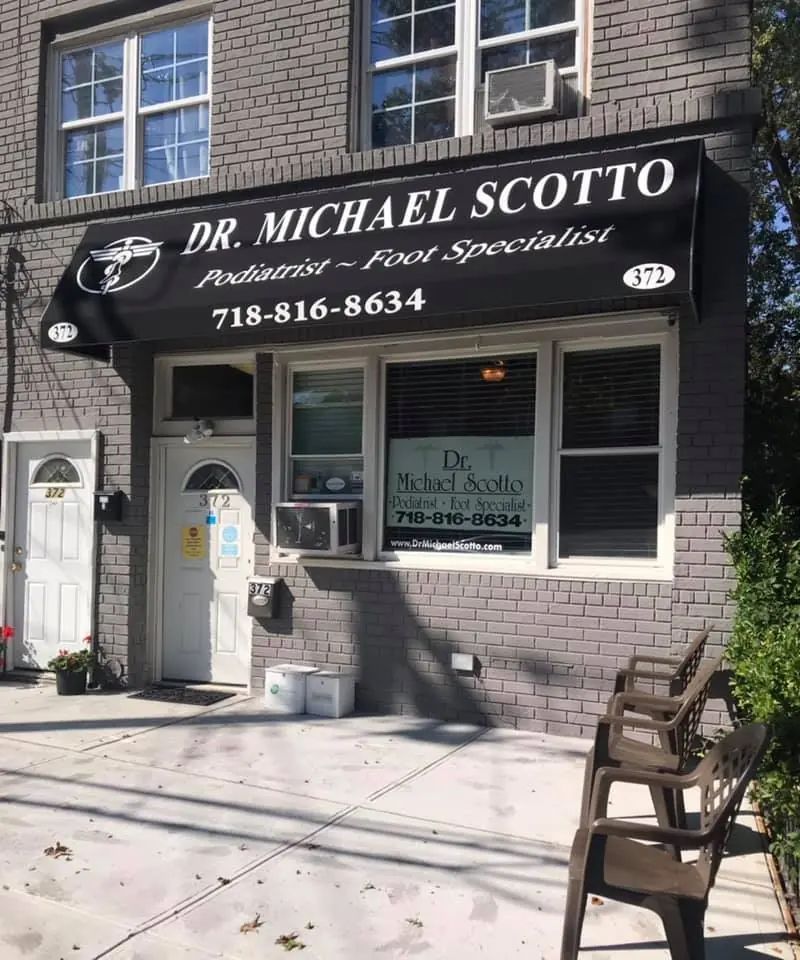
NY office
Staten Island, NY
372 Manor Road, 1st Floor
Staten Island, NY 10314
Monday, Wednesday, Thursday
Diabetes and wounds
Diabetic neuropathy is nerve damage caused by diabetes. In the feet it can bring burning, tingling or numbness, and it can make it hard to notice injuries. Dr. Scotto evaluates and manages its effects on the feet at his offices in Staten Island, NY and Tinton Falls, NJ.
Diabetic neuropathy usually starts in the toes and spreads slowly up the foot, often in both feet at about the same time. Some people feel a lot of discomfort. Others feel almost nothing, which can be just as risky. Common signs include:
Neuropathy can also dry out the skin of the feet, since the nerves that control sweating may be affected. Dry skin cracks more easily.
Over time, high blood sugar harms the small nerves and the tiny blood vessels that feed them. The longest nerves, those reaching the feet, tend to be affected first. Risk goes up with:
It can affect people with type 1 or type 2 diabetes. Some people learn they have diabetes only after neuropathy symptoms bring them to a doctor.
Any new numbness, tingling or burning in the feet deserves an exam. Knowing that you have reduced feeling changes how you care for your feet every day. It also helps Dr. Scotto plan how often to see you.
Call the office promptly if you have:
A warm, swollen foot in someone with neuropathy can be a sign of a serious bone and joint problem that needs quick attention. Same-day emergency appointments are available.
He first asks about your symptoms, how long you have had diabetes and how well it is controlled. He then tests how well your feet sense light touch, vibration and sometimes temperature. These quick tests are done with simple tools such as a soft filament and a tuning fork. He also checks reflexes at the ankle, muscle strength, skin condition and pulses.
Because other conditions can cause similar symptoms, Dr. Scotto looks for signs that point elsewhere, such as a nerve pinched near the ankle. An x-ray can be done at either office when a bone or joint problem might be part of the picture.
There is no treatment that restores damaged nerves. Care focuses on slowing further damage, easing discomfort and preventing injuries you might not feel.
Over-the-counter pain relievers often do little for nerve pain. Check with your doctor before taking any new medicine, especially if you have kidney problems.
Dr. Scotto offers telehealth visits for patients in New York and New Jersey. Testing for neuropathy relies on touch and vibration tools, so the first evaluation is done in person.
FAQ
Nerve damage from diabetes usually cannot be undone. The aim of care is to slow it down, ease symptoms and protect the feet. Good blood sugar control is one of the most important steps for keeping it from getting worse.
Many people with neuropathy notice that burning or tingling feels stronger at night. Fewer distractions and bedsheets touching the skin may play a part. Tell Dr. Scotto if symptoms keep you awake, since there are ways to help.
Damaged nerves can send mixed signals. The same foot can feel numb to touch and still have burning or stabbing pain. Both are common with diabetic neuropathy.
No. Pinched nerves, vitamin problems, some medicines, alcohol use and other conditions can also cause numbness. A pinched nerve near the ankle, called tarsal tunnel syndrome, is one example. That is why an exam matters. Read more about neuropathy from other causes.
It is safer not to. When feeling is reduced, you may not notice that a heating pad, hot water bottle or space heater is burning the skin. Warm socks are a safer choice for cold feet.
Keep reading
Where to find Dr. Scotto
NY office
372 Manor Road, 1st Floor
Staten Island, NY 10314
Monday, Wednesday, Thursday

NJ office
Scotto Podiatry LLC
106 Apple Street, Suite 200A, 2nd Floor
Tinton Falls, NJ 07724
Tuesday, Friday, Saturday
Call to schedule
Same-day emergency appointments available. Most insurance plans accepted.