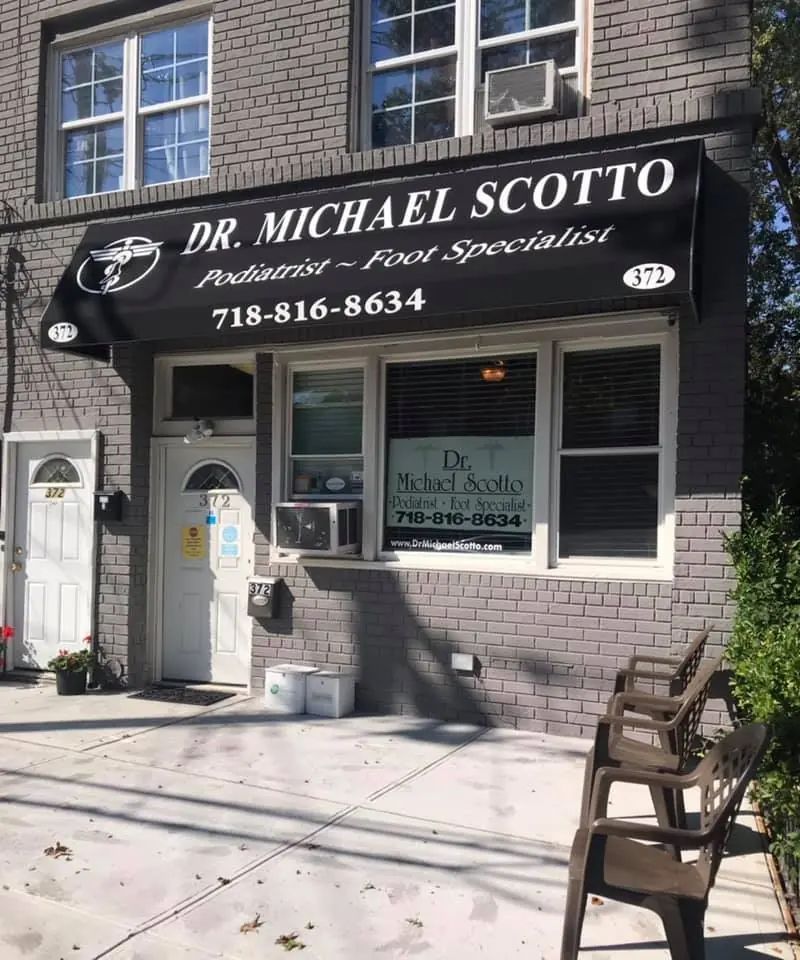
NY office
Staten Island, NY
372 Manor Road, 1st Floor
Staten Island, NY 10314
Monday, Wednesday, Thursday
Toes and forefoot
Corns and calluses are areas of thick, hardened skin that form where the foot is pressed or rubbed again and again. Calluses are usually broad and flat, while corns are smaller and can press into the skin like a pebble. Dr. Scotto treats both, and looks for the pressure behind them, at his Staten Island, NY and Tinton Falls, NJ offices.
Thick skin is the body's way of protecting itself from friction and pressure. A little is normal. It becomes a problem when it builds up enough to hurt, crack or change how you walk.
Corns and calluses form because of repeated pressure or rubbing on one spot. Finding the source of that pressure is the key to keeping them from returning. Common causes include:
A callus that does not hurt can often be managed with good shoes and moisturizer. It is time to be seen when corns are painful, keep coming back, or make it hard to walk. Anyone with diabetes, poor circulation or reduced feeling in the feet should have corns and calluses checked rather than treating them at home.
Important if you have diabetes or poor circulation: Do not cut or shave corns and calluses yourself, and do not use medicated corn pads or acid-based removers. A small cut or chemical burn can turn into an ulcer that is slow to heal. Have Dr. Scotto check these areas instead. See diabetic foot care for more.
Call the office promptly if you notice:
Urgent problems can often be seen through same-day appointments. Wounds are covered on the foot ulcers and wound care page.
Dr. Scotto looks closely at the thickened skin to confirm it is a corn or callus and not a wart or another skin problem. He then looks for the reason it formed. That means checking the shape of your toes, the position of the bones in the forefoot, your arch, and the wear pattern in your shoes. He will also ask about diabetes, circulation and any loss of feeling in your feet.
If a bone problem seems to be causing the pressure, such as a hammertoe or a prominent metatarsal, an x-ray can be taken at the office during the same visit.
Treatment has two parts: easing the thick skin that hurts now, and reducing the pressure that caused it.
Sometimes a corn keeps coming back because of a bent toe or a bunion. If padding and shoes are not enough, Dr. Scotto may talk with you about correcting the underlying problem with hammertoe surgery or bunion surgery.
Dr. Scotto offers telehealth visits for patients in New York and New Jersey. Trimming thick skin and checking for pressure points has to be done in person, so corns and calluses are treated in the office.
FAQ
Both are thickened skin caused by pressure. A callus is usually wide, flat and found on the sole or heel. A corn is smaller, often has a firm center and tends to form on the tops or sides of the toes or between them. Corns are often more painful.
Many medicated corn pads contain acid that softens skin, and it can also damage healthy skin around the corn. People with diabetes, poor circulation or numb feet should not use them, because a small burn can turn into a wound that is slow to heal. If you are unsure, ask Dr. Scotto first.
It often will if the pressure that caused it is still there. That is why treatment focuses on shoes, padding and foot shape as well as the thick skin itself.
Yes, plantar warts can look a lot like calluses. Warts are caused by a virus and may have tiny dark dots inside. They are often more painful when squeezed from the sides. See the plantar warts page.
Soft corns form between the toes, where moisture keeps the skin soft and white instead of hard. They are often found between the fourth and fifth toes and can become sore or infected.
Keep reading
Where to find Dr. Scotto
NY office
372 Manor Road, 1st Floor
Staten Island, NY 10314
Monday, Wednesday, Thursday

NJ office
Scotto Podiatry LLC
106 Apple Street, Suite 200A, 2nd Floor
Tinton Falls, NJ 07724
Tuesday, Friday, Saturday
Call to schedule
Same-day emergency appointments available. Most insurance plans accepted.