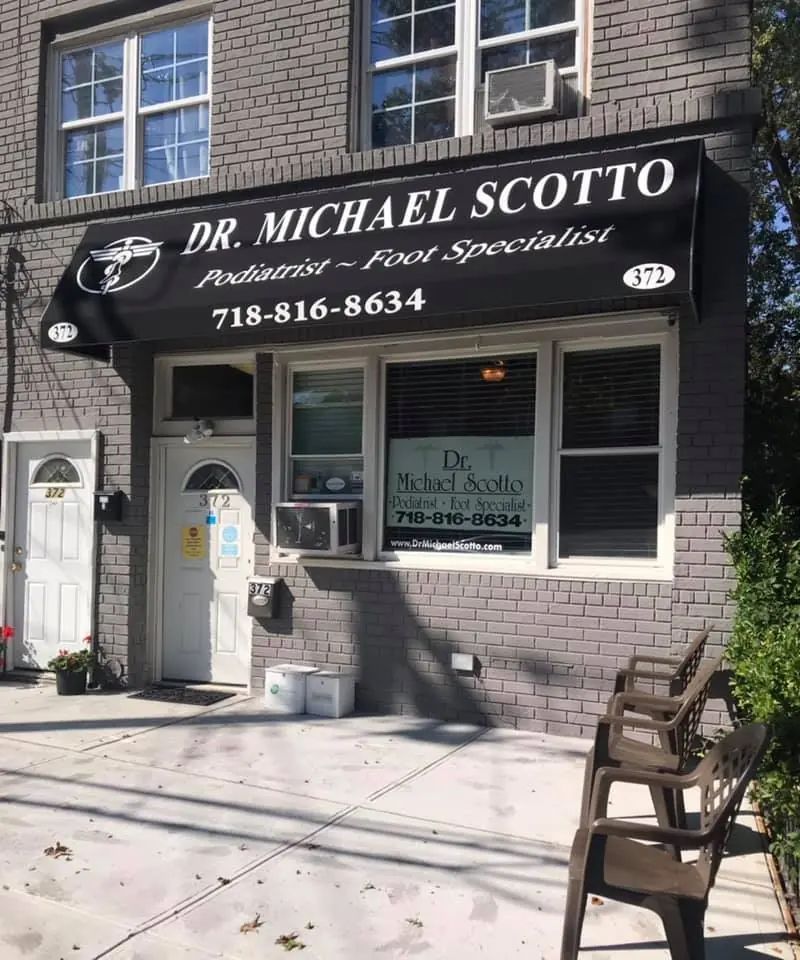
NY office
Staten Island, NY
372 Manor Road, 1st Floor
Staten Island, NY 10314
Monday, Wednesday, Thursday
Toes and forefoot
A hammertoe is a smaller toe that stays bent at its middle joint, so it curls down instead of lying flat. Claw toe and mallet toe are close relatives that bend at different joints. Dr. Scotto treats all three at his offices in Staten Island, NY and Tinton Falls, NJ.
Each smaller toe has small joints that let it bend and flatten as you walk. In a hammertoe, the muscles and tendons that pull on the toe fall out of balance. The toe bends at the middle joint and the knuckle rises up, where it can rub on the top of the shoe.
You may notice:
At first the toe can still be pushed flat with a finger. This is called a flexible hammertoe. Over time the tissues tighten and the joint can become rigid, meaning it no longer straightens. Flexible toes usually have more treatment choices.
A claw toe bends up at the base and down at the other joints, so the tip digs into the sole of the shoe. It often affects several toes at once. A mallet toe bends only at the last joint, near the toenail, and the tip of the toe presses into the ground. Both can cause the same rubbing and skin problems as a hammertoe.
These toe shapes develop when the pull of the muscles and tendons around the toe becomes uneven. Several things can lead to that imbalance:
Hammertoes become more common with age, and women are affected more often, in part because of shoe styles.
It helps to see a podiatrist while the toe is still flexible, since there are more ways to manage it at that stage. You should also come in if corns keep returning, if the toe hurts most days, or if you are having trouble fitting into your shoes.
Call the office promptly if you have:
Urgent concerns can often be seen through same-day podiatry appointments.
Dr. Scotto checks each toe to see which joints are bent and whether they still move. He looks for corns, calluses and areas of pressure, and he checks the big toe and the ball of the foot, since problems there often go along with hammertoes. He will also ask about your shoes, your activities and any health conditions that affect the nerves or blood flow in your feet.
An x-ray can show the position of the toe bones and any arthritis in the joints. It is taken at the office when needed, so you do not have to go somewhere else for it.
Treatment aims to relieve pain, protect the skin and keep the toe moving for as long as possible. Nonsurgical care comes first.
If a toe stays painful or keeps developing sores despite careful conservative care, Dr. Scotto may recommend hammertoe surgery. The approach depends on whether the toe is flexible or rigid and which joints are involved. He will explain the steps, the recovery period and the risks before you decide. Healing time differs from one person to the next.
Dr. Scotto offers telehealth visits for patients in New York and New Jersey. Telling a flexible toe from a rigid one takes a hands-on exam, so the first visit for a hammertoe takes place in the office.
FAQ
They differ by which joint bends. A hammertoe bends at the middle joint of the toe. A mallet toe bends at the joint closest to the tip. A claw toe bends upward where the toe meets the foot and downward at the joints beyond, so it curls like a claw.
A bent toe does not usually straighten on its own. Early on, while the toe still moves, shoe changes, padding and exercises can ease pain and may slow the problem down. Once the joint is stiff, those steps mainly protect the skin and reduce rubbing.
For many people it is mostly a comfort problem. It becomes more serious if a sore or blister forms on the toe, especially in someone with diabetes or poor circulation, because those wounds can be slow to heal.
Simple exercises, such as picking up a small towel or marbles with your toes, can help keep the toe muscles working while the joint is still flexible. They are not a fix for a toe that is already rigid.
Surgery may be discussed when a toe stays painful despite good shoes and padding, or when sores keep coming back. Dr. Scotto will talk through the options. See the hammertoe surgery page for more.
Keep reading
Where to find Dr. Scotto
NY office
372 Manor Road, 1st Floor
Staten Island, NY 10314
Monday, Wednesday, Thursday

NJ office
Scotto Podiatry LLC
106 Apple Street, Suite 200A, 2nd Floor
Tinton Falls, NJ 07724
Tuesday, Friday, Saturday
Call to schedule
Same-day emergency appointments available. Most insurance plans accepted.