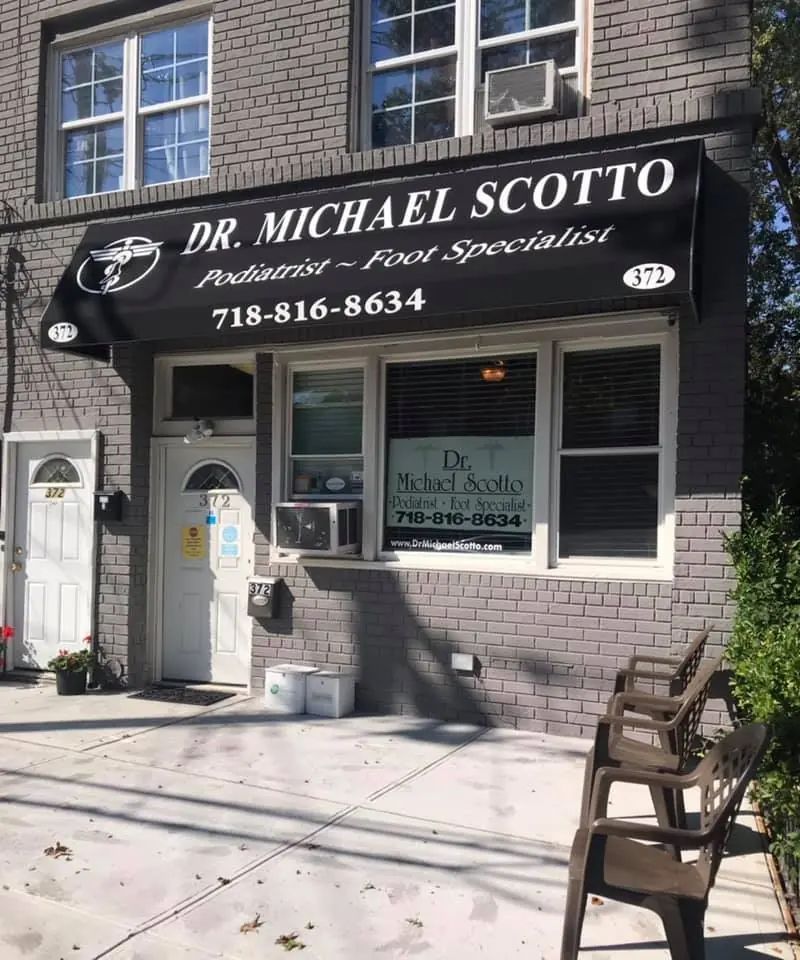
NY office
Staten Island, NY
372 Manor Road, 1st Floor
Staten Island, NY 10314
Monday, Wednesday, Thursday
Joints and nerves
Tarsal tunnel syndrome happens when the tibial nerve gets squeezed as it passes through a narrow space on the inside of the ankle. It can cause burning, tingling and numbness in the sole of the foot. Dr. Scotto evaluates and treats this nerve problem at his Staten Island and Tinton Falls, NJ offices.
The tarsal tunnel is a narrow channel on the inside of the ankle, just behind the bony bump. A thick band of tissue forms its roof. The tibial nerve runs through it along with blood vessels and tendons, then splits into branches that supply feeling to the heel and the sole. When something crowds that space, the nerve gets irritated.
People often describe:
Symptoms may begin suddenly or creep up over time. Usually one foot is affected.
Anything that takes up room inside the tunnel, or changes its shape, can press on the tibial nerve. Sometimes no single cause is found. Known contributors include:
Tingling and numbness should not be brushed off. Nerve problems can get worse if the pressure continues, and several conditions cause similar feelings, including neuropathy, a pinched nerve in the lower back, plantar fasciitis and neuromas. An exam helps tell them apart.
Call the office promptly if you have:
Weakness or numbness that spreads up the leg, or that affects both legs at once, may come from the spine. Seek urgent medical care for that, or for any loss of bladder or bowel control. For foot problems that cannot wait, see same-day appointments.
Dr. Scotto asks where you feel the symptoms, when they flare up, and about past injuries and health conditions. He examines the inner ankle for swelling or a lump, and he may tap gently along the path of the nerve. Tingling that shoots into the foot when the nerve is tapped is a helpful clue. He also checks feeling on the sole, muscle strength, circulation, and the shape and motion of your foot and ankle.
A digital x-ray, taken in the office, can show a bone spur, an old fracture or arthritis that may be crowding the tunnel.
Care focuses on taking pressure off the nerve and calming any swelling around it. Many people start with simple, non-surgical steps, and the plan is adjusted based on what is found to be crowding the nerve.
If another condition such as diabetes or arthritis is adding to the problem, getting it under control with your other doctors is part of protecting the nerve.
Dr. Scotto offers telehealth visits for patients in New York and New Jersey. Checking feeling, strength and the exact source of nerve symptoms requires a hands-on exam, so tarsal tunnel syndrome is first evaluated in the office.
FAQ
They are similar ideas. In both, a nerve is squeezed inside a tight passage. Carpal tunnel affects the wrist and hand, and tarsal tunnel affects the inner ankle and the bottom of the foot.
Diabetic neuropathy usually affects both feet evenly, often starting in the toes. Tarsal tunnel syndrome comes from pressure at one spot, so it more often affects one foot and follows the path of a single nerve. A person can have both. See the diabetic neuropathy page for more.
Standing and walking for long periods can add swelling and pressure inside the tarsal tunnel. That extra pressure on the nerve often makes symptoms worse later in the day. Resting with the foot up may help for a while.
They can contribute. When the arch flattens and the heel rolls inward, the tunnel can narrow and the nerve can stretch. Support for the arch is often part of the plan for that reason. Learn more about flat feet.
It depends on what is pressing on the nerve and how long it has been happening. Some people improve once the pressure is relieved. Nerve symptoms can be slow to change, so getting checked early is wise.
Keep reading
Where to find Dr. Scotto
NY office
372 Manor Road, 1st Floor
Staten Island, NY 10314
Monday, Wednesday, Thursday

NJ office
Scotto Podiatry LLC
106 Apple Street, Suite 200A, 2nd Floor
Tinton Falls, NJ 07724
Tuesday, Friday, Saturday
Call to schedule
Same-day emergency appointments available. Most insurance plans accepted.