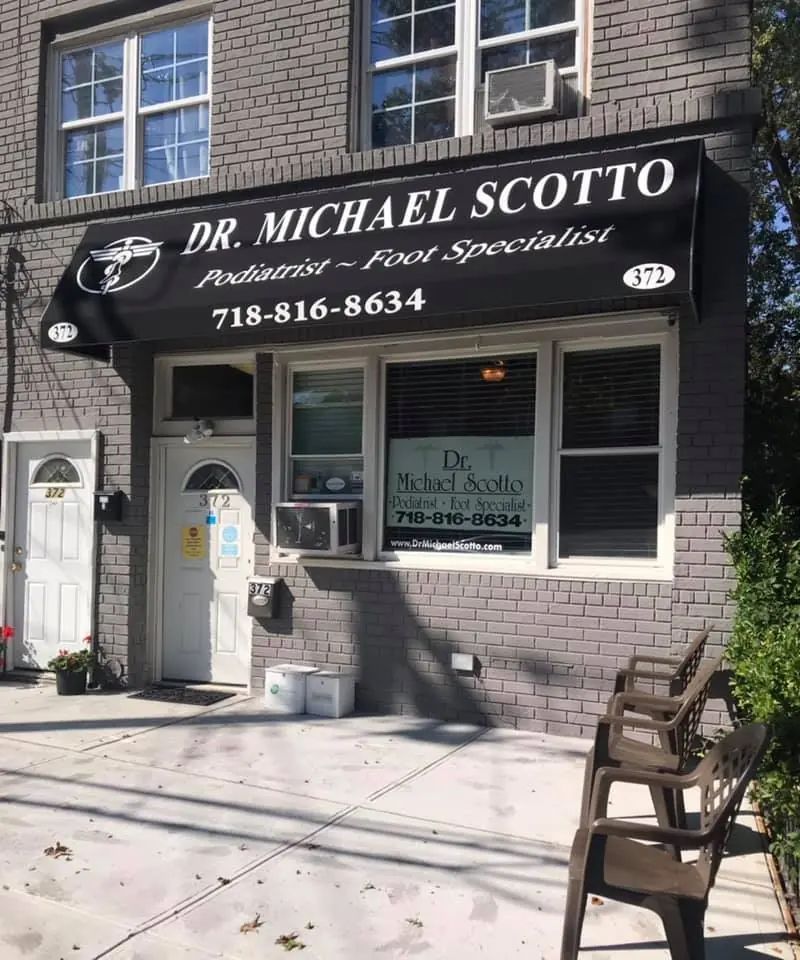
NY office
Staten Island, NY
372 Manor Road, 1st Floor
Staten Island, NY 10314
Monday, Wednesday, Thursday
Nails and skin
Plantar warts are small, rough growths on the soles of the feet caused by a virus. Because they sit where you put your weight, they can hurt like a pebble in your shoe. Dr. Scotto diagnoses and treats plantar warts at his Staten Island, NY and Tinton Falls, NJ offices.
Plantar warts grow on the bottom of the foot, most often under the heel or the ball of the foot. The pressure of standing tends to push them inward, so they can look flat even though they go deeper into the skin.
Look for:
Warts are often confused with corns and calluses. A callus usually hurts when pressed straight down and keeps the normal skin lines, while a wart tends to hurt more when pinched and interrupts them. An exam is the surest way to tell the difference.
Plantar warts are caused by the human papillomavirus, or HPV. This is a very common family of viruses. The types that cause foot warts are not the same as the ones linked to cancer of the cervix or throat. The virus gets in through tiny cuts, cracks or soft spots in the skin of the feet.
The virus can live on damp surfaces such as shower floors, pool decks and locker rooms. It can pass from person to person and from one part of your body to another. Picking, scratching or shaving over a wart can carry it to nearby skin.
Not everyone who comes into contact with the virus gets a wart. Each person's immune system responds a little differently.
A small wart that does not hurt may not need treatment right away. A podiatrist visit makes sense when a growth is painful, spreading, bleeding or changing, when home treatment has not worked, or when you are not sure what it is.
A note for people with diabetes or poor circulation: do not use over-the-counter wart acids, pads or freezing kits on your feet without a doctor's advice. These products damage skin on purpose. With reduced feeling or blood flow, you may not notice a burn until it has become an open wound. See diabetic foot care for more.
Call the office promptly if a growth on your foot:
Dr. Scotto looks at the growth, notes where it sits on the sole and checks how it responds to pressure. He may gently trim away a little of the hard surface skin. That makes it easier to see the dark dots and the pattern that mark a wart, and to tell it apart from a callus or corn.
Imaging is rarely needed for a wart. If something about your foot raises another question, both offices have digital x-ray on premises.
Warts can be stubborn. More than one visit is often needed, and sometimes more than one approach. Dr. Scotto chooses a plan based on the size, number and location of your warts, your age and your general health.
Some adults try drugstore wart products before a visit. If you are healthy and have no foot numbness, follow the label closely and stop if the skin around the wart becomes sore, red or broken.
Dr. Scotto offers telehealth visits for patients in New York and New Jersey. A wart has to be examined and treated in person, and it can be hard to tell from a camera image whether a spot is a wart or a callus.
FAQ
Yes, they can spread. The virus that causes them passes through direct contact and through damp surfaces like shower floors. Wearing sandals in shared showers and not touching or picking at a wart helps protect you and the people you live with.
Many plantar warts have tiny dark specks in them. These are small blood vessels that have clotted. They are one of the clues that help tell a wart apart from a callus.
Some do, especially in children, but it can take a long time and they may spread or grow in the meantime. Warts that hurt, multiply or keep coming back are worth having treated.
Please check with a doctor first. Over-the-counter wart acids work by breaking down skin, and on a foot with poor feeling or blood flow they can cause a burn or an open sore that is slow to heal. Dr. Scotto can suggest a safer plan.
Warts can return because the virus may still be in the skin even after the visible growth is gone. New warts can also appear from a fresh exposure. Follow-up visits help keep track of this.
Usually yes. Covering the wart, wearing your own shower shoes in locker rooms and keeping your feet dry helps avoid spreading it. If it hurts to run or jump, padding or a short break may help.
Keep reading
Where to find Dr. Scotto
NY office
372 Manor Road, 1st Floor
Staten Island, NY 10314
Monday, Wednesday, Thursday

NJ office
Scotto Podiatry LLC
106 Apple Street, Suite 200A, 2nd Floor
Tinton Falls, NJ 07724
Tuesday, Friday, Saturday
Call to schedule
Same-day emergency appointments available. Most insurance plans accepted.